
Why Addressing Inflammation May Be the Missing Step in Supporting Brain Health

The brain is not designed to simply survive. It is designed to adapt, heal, and thrive when given the right environment.
Many people spend years searching for answers to persistent brain fog, mental fatigue, poor concentration, headaches, or unexplained neurological symptoms. Blood work may appear normal, scans may reveal very little, and yet everyday life continues to feel more exhausting than it should. These experiences are becoming increasingly common, not because the brain is failing, but because the body is often sending signals that something deeper requires attention.
One of those signals may be neuroinflammation. Unlike a visible injury, inflammation within the nervous system often develops quietly. It can influence memory, emotional wellbeing, sleep quality, and cognitive performance long before it becomes obvious. At The Spring, Natural Medicine, neuroinflammation therapy in Santa Fe is built around understanding why inflammation developed in the first place. Rather than chasing symptoms, the focus is on uncovering the biological and environmental factors that may be preventing the nervous system from functioning at its best.
Brain Health is About More Than Remembering Things
The brain influences every conversation, movement, emotion, decision, and memory throughout the day. It constantly communicates with the immune system, digestive tract, hormones, and every major organ. When that communication becomes disrupted by chronic inflammation, the effects rarely remain isolated to the brain alone.
Many people assume brain health only matters later in life. In reality, inflammation within the nervous system can affect individuals of different ages, especially those living with chronic stress, autoimmune conditions, environmental toxin exposure, previous head injuries, infections, or ongoing metabolic imbalances.
This is why modern neurological care is increasingly moving beyond symptom management and toward identifying the processes driving inflammation.
Understanding Neuroinflammation Beyond the Definition
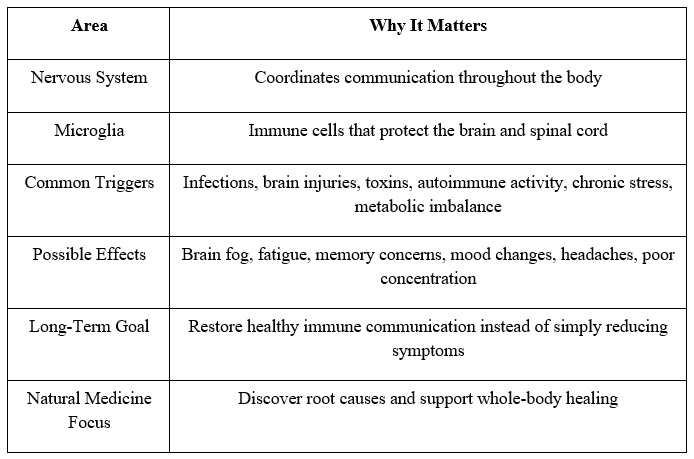
Neuroinflammation refers to the inflammatory response that occurs within the nervous system. It is primarily regulated by microglia, the immune cells that protect the brain and spinal cord from injury, infection, and harmful substances.
Under healthy conditions, these cells activate when needed and return to a resting state once healing begins. Problems arise when they remain activated for extended periods. Instead of supporting recovery, persistent inflammation may interfere with healthy nerve communication, cellular repair, and cognitive performance.
Neuroinflammation itself is not always the primary problem. More often, it reflects that another imbalance within the body is asking for attention.
Informative Overview of Neuroinflammation
The Silent Triggers That Often Go Unnoticed
Inflammation rarely develops without a reason. It is usually the body's response to ongoing internal or external stressors.
● The Gut and Brain Are Constantly Communicating
The digestive system and nervous system share a close relationship known as the gut-brain connection. Changes in digestive health, food sensitivities, or microbial imbalance may influence immune activity that extends well beyond the digestive tract.
Supporting gut health can become an important part of improving neurological wellness.
● Environmental Exposures Matter More Than Many Realize
Modern life introduces daily exposure to pollutants, pesticides, mold, heavy metals, and other environmental toxins. While the body naturally removes many harmful substances, excessive exposure may contribute to ongoing immune activation.
● Stress Changes Brain Chemistry
Stress is more than an emotional experience. Long periods of physical or emotional stress may influence hormone regulation, inflammatory signaling, sleep quality, and nervous system resilience. Over time, these changes can affect mental clarity and overall well-being.
● Previous Injuries Can Leave Lasting Effects
Traumatic brain injuries, even those considered mild, may continue influencing inflammatory pathways long after physical recovery appears complete.
When Everyday Symptoms Point Toward Something Bigger
One reason neuroinflammation is frequently overlooked is because its symptoms often resemble many other conditions.
Someone experiencing inflammation within the nervous system may notice
● Feeling mentally drained after simple tasks
● Losing focus more easily
● Forgetting everyday information
● Increased sensitivity to stress
● Interrupted sleep
● Mood fluctuations
● Slower thinking
● Persistent headaches
● Low motivation
● Difficulty processing information
These symptoms do not automatically confirm neuroinflammation, but they may indicate that a comprehensive evaluation is worthwhile.
Why Finding the Trigger Changes Everything
Treating symptoms without understanding their source is similar to silencing a smoke alarm without investigating the fire.
At The Spring, Natural Medicine, neuroinflammation therapy in Santa Fe begins with asking deeper questions:
● What is activating the immune system
● Could digestive health be contributing
● Are environmental exposures influencing inflammation
● Is nutritional status affecting brain function
● Could previous illness or injury still be impacting neurological health
By identifying these contributing factors, care becomes more personalized and meaningful.
Supporting the Brain Through Natural Medicine
The body has remarkable healing abilities when given the proper support. Natural medicine focuses on improving the internal environment that allows those healing processes to function more effectively.
Depending on each individual's needs, care may include
● Functional Assessments
Looking beyond isolated symptoms to better understand how different body systems interact.
● Nutritional Guidance
Providing nutrients that support healthy neurological and immune function.
● Lifestyle Recommendations
Improving sleep, movement, hydration, and stress management to encourage healthier inflammatory balance.
● Targeted Natural Support
Personalized recommendations based on individual findings rather than generalized protocols.
Instead of applying the same solution to everyone, therapy reflects each person's unique health history and biological needs.
Small Daily Choices Influence Brain Function
Brain health is shaped by thousands of small decisions rather than one dramatic change.
Healthy habits that may support neurological wellness include
● Choosing nutrient-dense meals
● Maintaining consistent sleep routines
● Staying physically active
● Supporting digestive health
● Managing stress proactively
● Limiting processed foods
● Staying hydrated
● Reducing unnecessary chemical exposure
● Spending time outdoors
● Prioritizing restorative recovery
While these habits cannot replace professional care, they create a stronger foundation for overall health.
Why Personalized Medicine Represents the Future of Brain Care
No two people develop neuroinflammation for identical reasons.
One individual may be responding to chronic infection, while another struggles with autoimmune activity or environmental toxins. Someone else may experience inflammation following a concussion or prolonged emotional stress.
Because every patient's biological story is different, treatment should never rely on assumptions.
The Spring, Natural Medicine, embraces this individualized philosophy by creating care plans that reflect each person's symptoms, history, lifestyle, and wellness goals. This thoughtful approach allows practitioners to focus on supporting long-term neurological resilience rather than temporary symptom relief.
Looking Beyond the Brain and Toward Whole Body Wellness
The nervous system never works in isolation. It reflects the health of the immune system, digestive tract, metabolism, hormones, and the environment surrounding every cell. When these systems are supported together, the brain has a greater opportunity to function as it was designed.
At The Spring, Natural Medicine, neuroinflammation therapy is centered on understanding the complete picture instead of treating isolated symptoms. Through personalized evaluations and natural therapies, the clinic helps patients move closer to improved clarity, resilience, and long-term wellness.
To further support a comprehensive healing journey, explore bioenergetic medicine in Santa Fe, an integrative approach that complements whole-body care by identifying energetic imbalances that may influence overall health. Schedule a consultation with The Spring, Natural Medicine, and take the next step toward restoring balance from the inside out.
Frequently Asked Questions (FAQs)
1.Can neuroinflammation affect productivity even if medical tests appear normal?
Yes. Some people experience difficulty concentrating, slower thinking, or mental fatigue despite routine testing showing few abnormalities. Functional assessments may provide additional insights into underlying contributors.
2.Is neuroinflammation connected to digestive health?
Research continues to explore the gut-brain connection. Digestive health influences immune activity, which may play a role in neurological inflammation for some individuals.
3.Does chronic stress actually create inflammation in the brain?
Long-term stress may influence inflammatory pathways, hormone regulation, and immune function, all of which can affect the nervous system over time.
4.Why do symptoms often come and go?
Inflammation may fluctuate depending on factors such as sleep, stress, nutrition, illness, environmental exposures, and overall immune activity.
5.How is neuroinflammation therapy different from simply taking medication?
Natural therapy focuses on understanding why inflammation developed while supporting the body's healing mechanisms through individualized care. Treatment recommendations vary according to each person's health profile.
6.Who should consider a professional evaluation?
Individuals experiencing persistent brain fog, cognitive changes, unexplained fatigue, headaches, memory concerns, or neurological symptoms that continue without clear answers may benefit from a comprehensive assessment..